
If you’ve ever wondered whether God can truly reach into the deepest trauma and bring healing, St. Josephine Bakhita is a powerful answer.
Born in Sudan, kidnapped as a child, sold into slavery several times, and later freed in Italy, she became a joyful Catholic religious sister and is now the patron saint of Sudan and of victims of human trafficking. africassnd.org+2Wikipedia+2
This post will walk through her story, her religious vocation with the Canossian Daughters of Charity, and what her life can teach us about trusting God with our wounds.
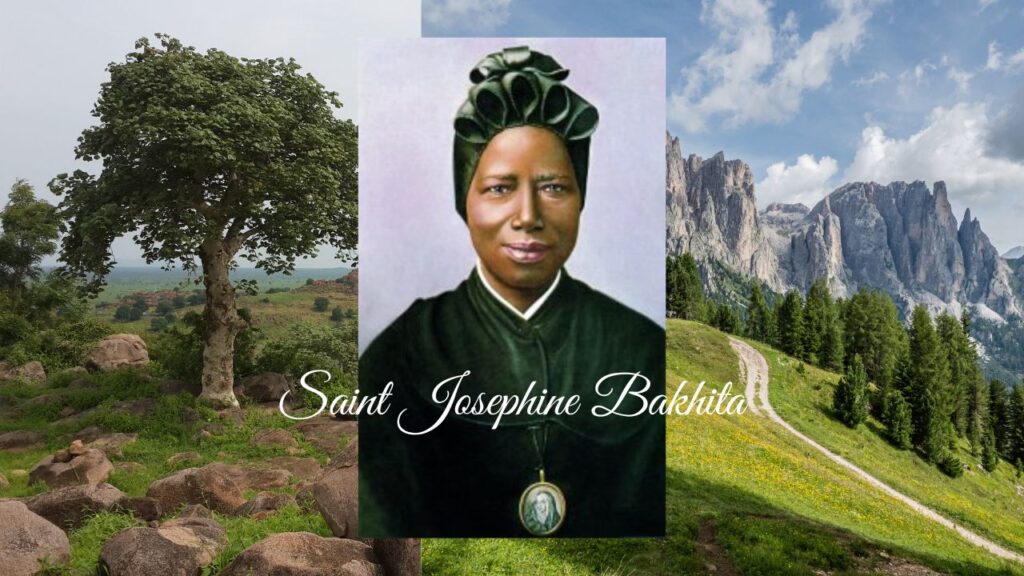
Early Life in Sudan: A Child Taken, a Name Lost
St. Josephine Margaret Bakhita was born around 1869 in the Darfur region of what is now Sudan, into a loving family. Wikipedia+1
When she was about 7–9 years old, Arab slave traders kidnapped her. In the terror of being taken and forced to walk hundreds of kilometers barefoot, the trauma was so severe that she forgot her birth name. Her captors gave her a new name: “Bakhita,” an Arabic word meaning “fortunate” or “lucky.” stjosephsharlem.com+3Wikipedia+3Franciscan Media+3
For the next 12 years, Josephine was bought and sold multiple times, enduring humiliation, violence, and dehumanization. Wikipedia
And yet, even in this darkness, God was not absent. Her story echoes the biblical cry:
“The Lord is close to the brokenhearted and saves those who are crushed in spirit.” (Psalm 34:18)
A New Country, a New Hope: Arrival in Italy
Eventually, Josephine was purchased by an Italian consul and taken out of Sudan. Her journey eventually brought her to Italy, where she was given to the Michieli family and helped care for their small daughter. Wikipedia+1
When the family needed to travel, Josephine and the child were entrusted to the care of the Canossian Daughters of Charity in Venice. There, life changed completely:
- She encountered kindness instead of cruelty.
- She experienced a community that prayed, served the poor, and loved Christ.
- She began to learn about Jesus, a Lord who suffered for her and loved her personally.
Through the Canossian sisters, Josephine discovered that she was not just “property” or a number—she was a beloved daughter of God.
“For I know the plans I have for you,” declares the Lord… “plans to give you hope and a future.” (Jeremiah 29:11)
Those words, often quoted today, could easily be written over her life.
Legal Freedom: “I Belong to God”
When the Michieli family later returned and tried to take Josephine back to Africa, she refused to go. A legal dispute followed.
Italian law at the time did not recognize slavery, and the court ruled that Josephine had been free since she arrived on Italian soil. Wikipedia
At last, she was legally recognized as free. But what she did next was remarkable:
- She asked to remain with the Canossian sisters.
- She requested baptism and Christian initiation.
- On January 9, 1890, she was baptized, confirmed, and received her First Communion, taking the name Giuseppina (Josephine). Wikipedia+1
Later she would say that coming to know Christ and His Church was the greatest gift of her life. Her experience beautifully reflects Jesus’ words:
“If the Son sets you free, you will be free indeed.” (John 8:36)
Religious Life with the Canossian Daughters of Charity
In 1893, Josephine entered the novitiate of the Canossian Daughters of Charity, Servants of the Poor (FDCC), an international missionary congregation founded by St. Magdalene of Canossa and dedicated to serving the poor, the sick, and those in need. projectkindy.com+3Wikipedia+3Wikipedia+3
She professed her vows in 1896, and for about 50 years she lived as a Canossian sister, mostly in Schio, a small town in northern Italy. Wikipedia+1
Her duties were simple:
- Cooking
- Working as a sacristan
- Welcoming people at the door as a portress
But the way she did these tasks made people sense something holy about her. The townspeople called her “Mother Moretta” (“little black mother”), and came to her for comfort, prayer, and encouragement. Wikipedia+1
The Canossian charism is rooted in Christ crucified—God’s love poured out in suffering for the salvation of the world. Canossian Daughters of Charity+1 Josephine’s life became a living icon of that love: a woman whose wounds were not erased, but transformed into a source of compassion.
Canonization and Pope John Paul II’s Words
St. Josephine Bakhita died on February 8, 1947 in Schio. Almost immediately, people began to honor her as a holy woman. The Church opened her cause in 1959, and she was declared Venerable in 1978, Beatified in 1992, and canonized on October 1, 2000 by Pope John Paul II. africassnd.org+2Wikipedia+2
At her canonization, John Paul II highlighted how powerfully her life speaks to the modern world. He said that in St. Josephine Bakhita we find a shining advocate of true emancipation, and that her story encourages us to work actively for the freedom and dignity of women and girls who still suffer violence and oppression today. Vatican+1
Today, St. Josephine Bakhita is:
- Patron saint of Sudan and South Sudan
- Patron saint of victims of human trafficking and modern slavery Facebook+4africassnd.org+4Wikipedia+4
Her feast day is celebrated on February 8, which has also become an international day of prayer and awareness against human trafficking. africassnd.org+2Santa Marta Group+2
Lessons from St. Josephine Bakhita for Our Healing
St. Josephine’s life is not “pretty” in the worldly sense; it is raw, wounded, and redeemed. For our own journey with God—especially for those carrying trauma, rejection, or deep fear—her witness offers several powerful truths:
1. Your Past Does Not Define Your Final Identity
Josephine’s early life was marked by violence, loss, and humiliation. Yet in Christ, she discovered a new name and a new identity as God’s beloved daughter.
“See what love the Father has lavished on us, that we should be called children of God! And that is what we are.” (1 John 3:1)
No matter what has been done to us, the last word over our life belongs to God’s love.
2. God Can Enter Even the Deepest Wounds
Her story shows that God does not only work in tidy, “respectable” lives. He enters places of slavery, migration, racial prejudice, and trauma. He does not erase history, but He can transform it into a place of encounter, strength, and compassion.
3. Forgiveness Is a Miracle of Grace
Josephine famously said that if she met her kidnappers, she would thank them, because through the chain of events they began, she eventually came to know Christ and become a religious sister. Wikipedia+1
This does not mean that the evil they did was okay; it means that God’s grace worked so deeply in her heart that bitterness did not have the final word. That level of forgiveness is not human optimism—it’s the supernatural work of the Holy Spirit.
“I can do all things through Him who strengthens me.” (Philippians 4:13)
4. Holiness Can Be Very Quiet
St. Josephine did not found a new order or write big books. She cooked, sewed, prayed, smiled, and welcomed people. Her holiness lived in daily faithfulness and gentle love.
For us, this means that healing and sainthood do not require a dramatic platform. Loving God and neighbor in our ordinary duties—especially from a place of suffering—can shine Christ’s light in hidden but powerful ways.
A Simple Prayer to St. Josephine Bakhita
St. Josephine Bakhita,
you who were taken from your home and suffered as a slave,
yet found freedom and joy in the Heart of Jesus,
pray for all who are wounded in body, mind, and spirit.Intercede especially for victims of human trafficking and all who feel trapped or forgotten.
Help us to believe that no wound is too deep for God’s love,
and to work for the dignity and freedom of every person.St. Josephine Bakhita, gentle sister and friend,
pray for us. Amen.
Bibliography / Sources
- Wikipedia – “Josephine Bakhita” – biographical overview, enslavement, religious life, canonization details. Wikipedia
- Canossian Sisters – “St. Josephine Bakhita, ‘The Universal Sister’” – congregation perspective on her life and spirituality. Canossian Daughters of Charity+2Canossian Daughters of Charity+2
- Vatican – Homily of St. John Paul II, 1 October 2000 (Canonization) – reflections on St. Josephine as a witness to true emancipation and dignity. Vatican+1
- Catholic Charities & other Catholic organizations – summaries of St. Josephine Bakhita as patron saint of victims of human trafficking and modern slavery.
#StJosephineBakhita
#CatholicSaints
#HumanTraffickingAwareness
#SurvivorSaint
#HealingInChrist
#CanossianSisters
#CatholicFaith
#SpiritLoveSong
#TraumaAndGrace
#SaintOfTheDay